Printed from The BadMonkey Workshop, badmonkeymusic.com/workshop/
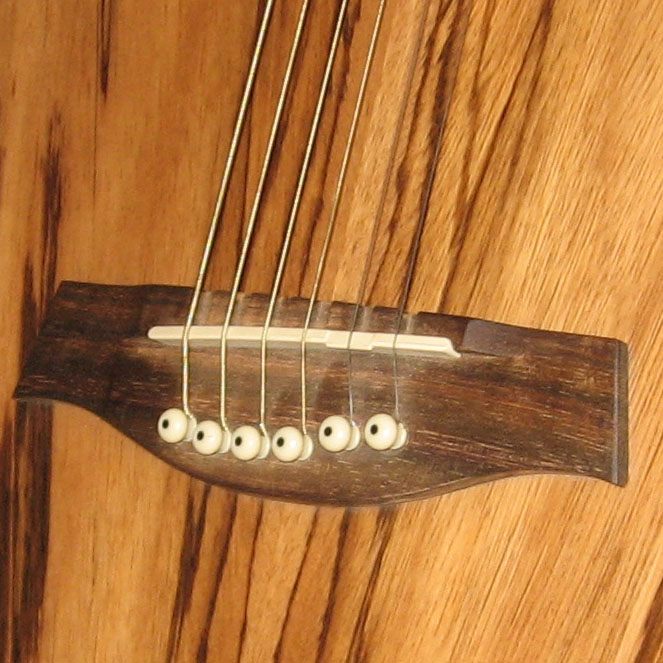
An acoustic bridge is not just a string anchor. It transfers string energy into the top and lives under constant tension. When it starts to lift, the guitar is telling you something structural is changing.
How to spot bridge lift
A lifting bridge may show a visible gap at the back edge, finish disturbance around the bridge, rising action, a bellying top or tuning instability. A thin piece of paper sliding under the bridge edge is a warning sign.
Why bridges lift
- Heat softens glue.
- Humidity changes move the top.
- String tension works on a weak glue joint.
- Previous repair work was incomplete.
- The bridge plate or top may also be involved.
Why quick glue is not enough
For a lasting repair, the bridge and top surfaces need to be properly prepared and clamped. Simply forcing glue under the edge usually leaves old glue, dirt and poor contact in the joint. It may look fixed briefly while the real problem remains.
What the bench checks
The inspection should include bridge fit, top shape, bridge plate condition, saddle height, neck angle, humidity history and string tension. The repair depends on the whole guitar, not just the visible gap.
FAQ
Can I keep playing with a lifting bridge?
It is risky. Continued string tension can make the damage worse.
Does bridge lift always mean the guitar is ruined?
No. Many lifting bridges can be repaired properly if caught before the top or bridge is badly damaged.