Players are changing tension more often than they used to. Drop C, extra-light to heavy, seven strings, a weekend in D standard. The guitar that felt great last month suddenly buzzes, goes sharp in first position, or will not stay in tune. That is not the guitar falling apart. That is last month’s setup answering a different question.
Tension is the setup
Relief, action, nut slot width, saddle height and intonation are all set against a specific pull. Heavier strings or a lower tuning change that pull. The neck moves. Slots that were a hair wide for nines pinch elevens. A floating trem that was balanced in E is no longer a balanced system. Chasing one truss-rod click after a gauge jump is how you get a guitar that feels worse in two places at once.
The nut and the tremolo tell on you first
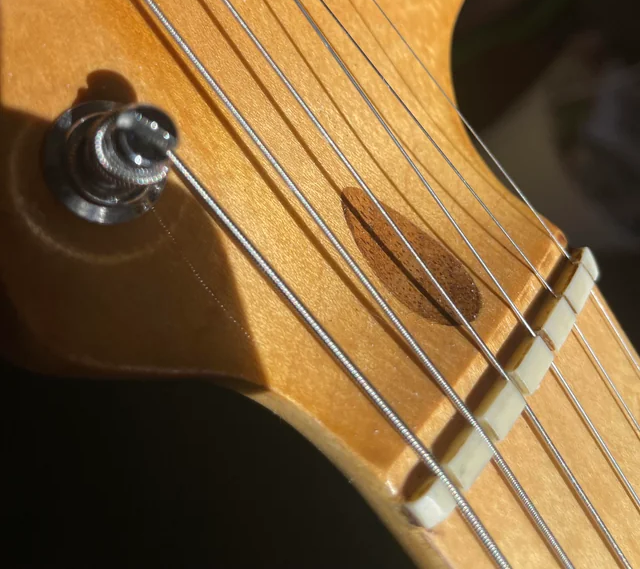
A tighter slot binds and pings. A slot cut for a bigger string can rattle or let a lighter string wander. On a Floyd or two-point trem, the springs and the strings are a seesaw. Change one side and the bridge leans. Locking tuners do not save that. They only stop the string from slipping at the post.
Tell the bench the tuning you actually use
A setup for the factory nines is the wrong job if you live in C. Bring the strings you play, the tuning you gig, and say so on the intake. The honest repair is one setup for one tension, not a compromise that is “okay” in two tunings and right in neither. If you switch a lot, pick the tuning that matters and accept that the other one will need a second pass, or a second guitar.
The guitar did not stop working. It is still set up for the strings that were on it when the work was done.