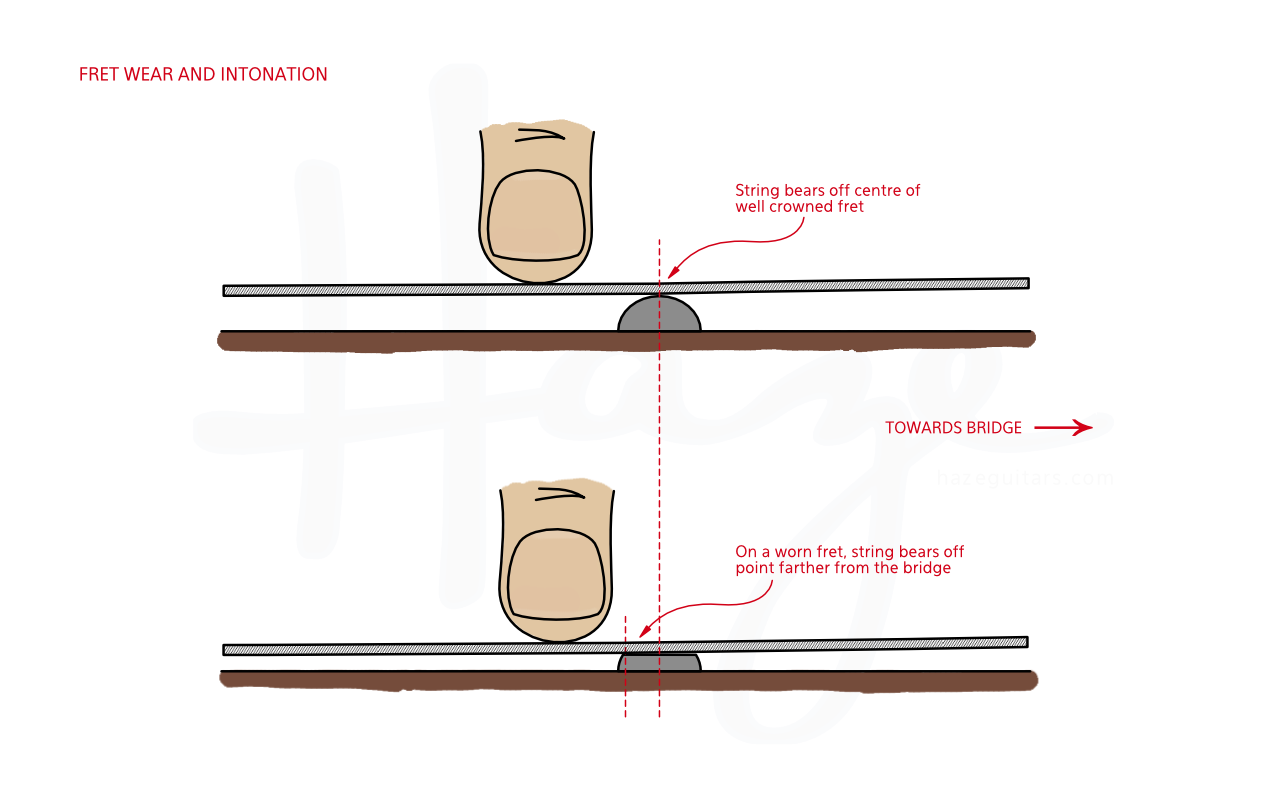
Most players think intonation starts and ends at the bridge saddle. The saddle matters, but it is only one piece of the system.
The saddle can only correct so much
If the nut slots are high, frets are worn flat, the neck has too much relief, the strings are old, or the bridge is in the wrong place, the saddle may run out of travel before the guitar plays in tune.
Sometimes the tuner says the 12th fret is correct, but open chords still sound sour. That can point back toward the nut, the first few frets, or how much pressure the player uses when fretting.
Old strings lie
Dirty, kinked, corroded, or uneven strings can make intonation readings jump around. Setting intonation on dead strings is like aligning a car with a bent wheel. The measurement may be precise, but it is not useful.
The repair-shop approach
Before blaming the bridge, a good setup checks string condition, neck relief, nut slot height, fret condition, saddle travel, scale length, and the way the player actually plays. Intonation is not just a screwdriver job. It is the final step after the rest of the guitar is telling the truth.